
Standing Power Wheelchairs
A power standing wheelchair moves you from sitting to standing at the push of a button, with no transfer needed. Standing at eye level supports health, independence and everyday tasks, from the kitchen counter to the workplace. BlueBay Mobility works with you and your therapist across Orange County and Southern California to find the right standing or seat-elevating chair.
Why standing matters
For people who sit for most of the day, regular standing can bring health and quality-of-life benefits. Your physician and therapist decide whether standing is safe and appropriate for you.
Bone & joint health
Weight-bearing in standing can help maintain bone density and range of motion at the hips, knees and ankles.
Circulation & skin
Changing position redistributes pressure and can support circulation and skin health.
Bladder, bowel & breathing
Upright posture may help bladder emptying, bowel function and lung capacity.
Spasticity & tone
A gentle, sustained stretch in standing may help manage spasticity for some users.
Independence
Reach cabinets, counters, shelves and light switches without help from a caregiver.
Eye-level connection
Talk face to face at work, at school and in social settings.
These are potential benefits described in clinical literature, including the RESNA position paper on wheelchair standing devices. Results vary by person. This is not medical advice.
Standing & seat-elevating power chairs
Standing chairs are complex rehab technology. Each one is configured after a clinical evaluation, so pricing depends on seating, controls and options. Ask about any model and we’ll walk you through the process.
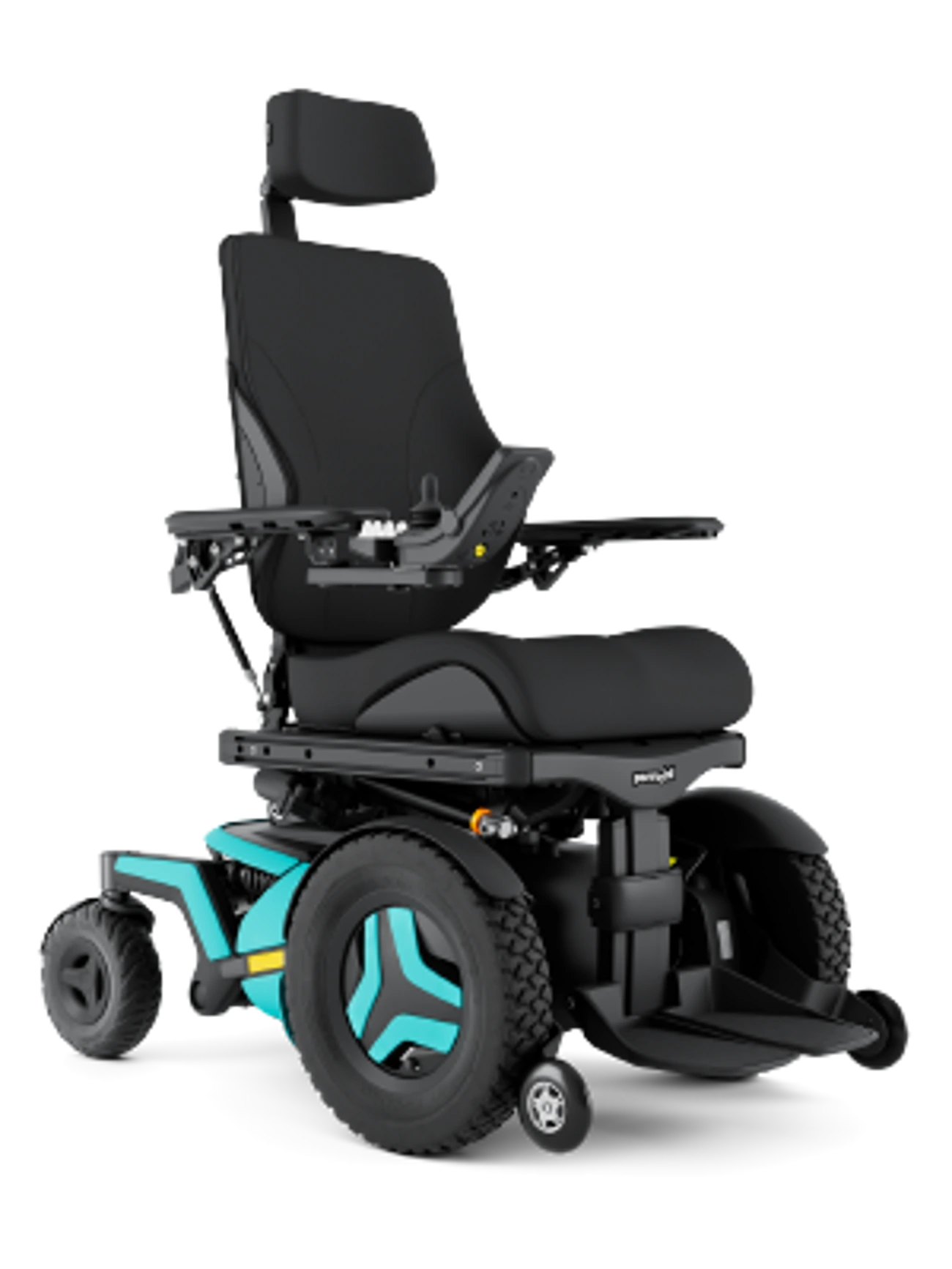
Permobil F5 Corpus VS
A front-wheel drive power chair with a built-in vertical standing system and Corpus seating. You can drive while standing, so it’s well suited to daily standing at home, at work and in the community.
- DriveFront-wheel
- StandingFull vertical stand
- Drive while standingYes
- SeatingPermobil Corpus

LEVO C3 Power Standing
A dedicated standing power chair built around the stand function, for users who plan to stand often through the day, including people with spinal cord injury.
- TypeDedicated standing chair
- StandingFull vertical stand
- Stand-upPowered, no transfer
- Best forFrequent daily standing

Quantum Q6 Edge 3 with iLevel
Not a stander. iLevel raises the seat while you stay seated, bringing you close to standing eye level for transfers, reaching and conversation. You can also drive while the seat is raised.
- DriveMid-wheel
- ElevationUp to 12″ (iLevel)
- Drive while elevatedYes
- Tilt & reclineAvailable
Features depend on the configuration ordered. Model availability and specifications are set by each manufacturer and can change. We also work with other major complex rehab manufacturers, so ask if you have a specific chair in mind.
Standing vs. seat elevation
Both raise you to eye level, but they work differently. Your evaluation decides which one fits your body and your goals.
| Power standing | Power seat elevation | |
|---|---|---|
| Position | Hips and knees extend into an upright, weight-bearing stand | You stay seated while the whole seat rises |
| Weight-bearing | Yes, through the legs | No |
| Main goals | Health benefits of standing, reach and eye level | Reach, transfers and eye level |
| Clinical needs | Enough hip and knee range, bone health and blood-pressure tolerance | Fewer physical prerequisites |
| Examples | Permobil F5 Corpus VS, LEVO C3 | Quantum iLevel, Permobil seat elevators |
How the evaluation works
A standing chair is fitted to you, not chosen off a shelf.
Contact us
Tell us your diagnosis, your current chair and your goals. We’ll explain the next steps and what your physician needs to provide.
Clinical assessment
Your physical or occupational therapist assesses your range of motion, tolerance for standing, posture and seating needs, and we coordinate with them throughout.
Trial & configuration
Where available, you try a demo chair. Then we specify the seating, controls and options.
Funding & paperwork
We help gather the documentation your plan needs and submit it for approval.
Delivery & follow-up
We fit the chair, train you and your caregivers, and provide service afterward.
Standing power wheelchair FAQ
What is a standing power wheelchair?
It’s a power wheelchair with a built-in system that raises you from sitting to a supported standing position, with no transfer to a separate standing frame. Some models, like the Permobil F5 Corpus VS, can drive while you’re standing.
Who is a good candidate for a standing wheelchair?
Often people with spinal cord injury, cerebral palsy, MS, ALS, muscular dystrophy or spina bifida who sit for long periods. You need enough hip and knee range of motion, bone health and blood-pressure tolerance to stand safely, and your therapist and physician confirm that during the evaluation.
Does Medicare cover standing wheelchairs?
Medicare covers power seat elevation for qualifying users. Coverage of the power standing feature has been under CMS review and varies by plan, so we confirm your benefits before ordering. Private insurance, the VA and other programs may also help fund it.
What’s the difference between standing and seat elevation?
Standing moves you into an upright, weight-bearing position. Seat elevation raises the seat while you stay seated. Elevation helps with reach and transfers, while standing adds the potential health benefits of weight-bearing.
Do you serve my area?
Our showroom is in Tustin, CA, and we serve Orange County and the surrounding Southern California area. Call us to talk about evaluations near you.
Ready to stand up again?
Talk to our complex rehab team in Tustin. We bring 22+ years of mobility experience and work alongside your therapist from evaluation through delivery.
Request an evaluation