
Power Tilt & Recline Wheelchairs
Power seating lets you change position on your own, at the touch of a switch. Tilt, recline, seat elevation and power legrests help with pressure relief, comfort, breathing, tone management and daily tasks. BlueBay Mobility works with you and your therapist across Orange County and Southern California to configure the right complex rehab power chair.
What each power seating function does
Most complex rehab chairs combine several functions. Your evaluation decides which ones you need, and that drives both the chair you get and how it’s funded.
Power tilt
Tilts the whole seat back while your hip angle stays the same. It shifts pressure off the buttocks and thighs without you sliding forward. Tilt is the core function for pressure relief.
Power recline
Opens the angle between seat and backrest, for rest, stretching, breathing, catheterization or personal care. It’s usually paired with tilt to limit shear and sliding.
Seat elevation
Raises the seat while you stay seated, for transfers, reaching counters and shelves, and conversation at eye level.
Power legrests
Elevating or articulating legrests raise and extend your legs for swelling, comfort and positioning.
Combined positions
Programmable presets let you move into rest, pressure-relief or drive positions with one button.
Alternative controls
Head arrays, sip-and-puff and specialty joysticks let you drive and run power seating if you can’t use a standard joystick.
Power tilt & recline wheelchairs we fit
Every chair is configured after a clinical evaluation, so pricing depends on the seating, controls and options you need. Ask about any model and we’ll walk you through the process.
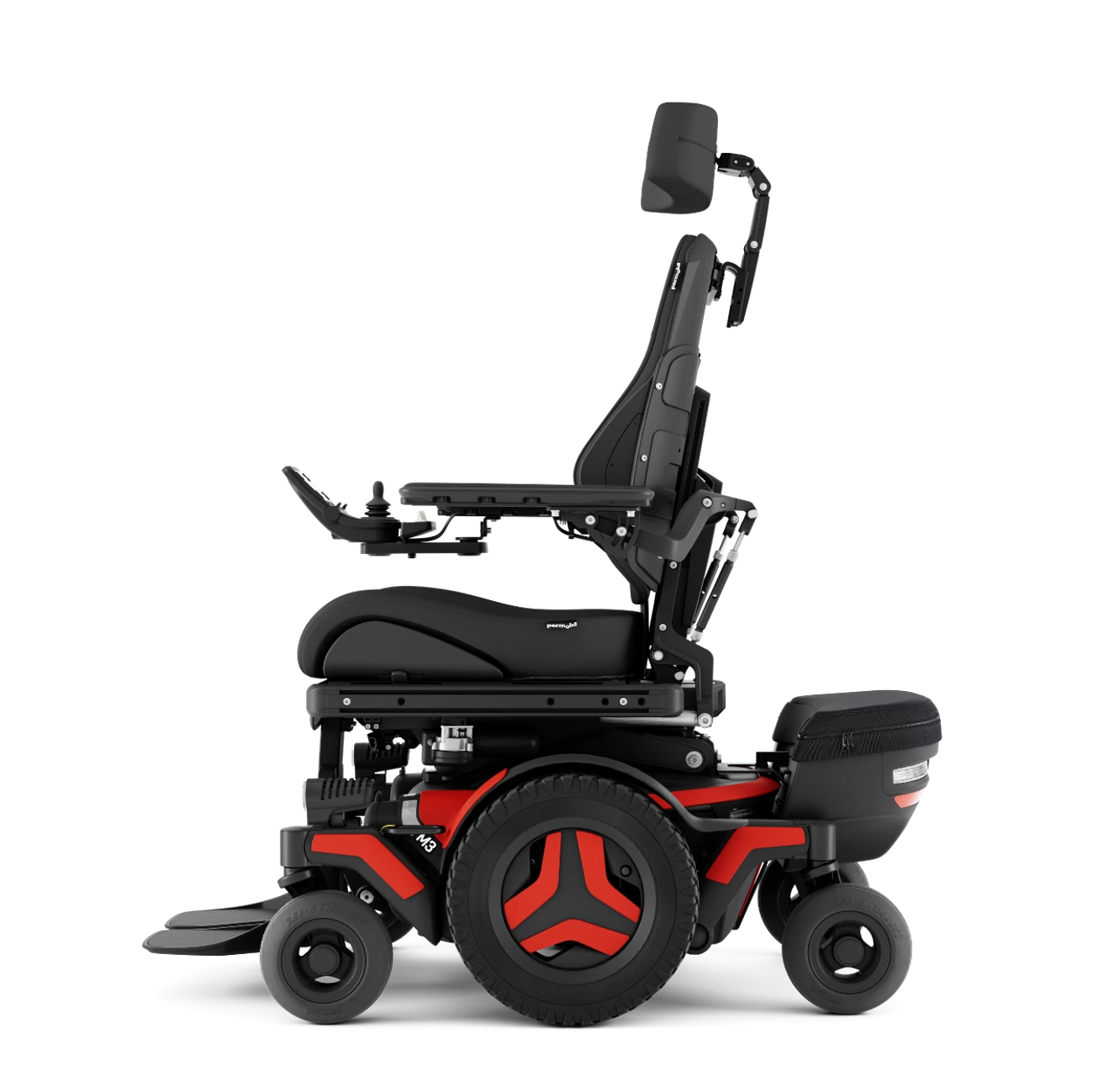
Permobil M3 Corpus
A compact mid-wheel drive chair with Permobil Corpus seating. It turns tightly indoors and can be set up with power tilt, recline, seat elevation and legrests.
- DriveMid-wheel
- Power tiltAvailable
- Power reclineAvailable
- Seat elevatorActiveHeight
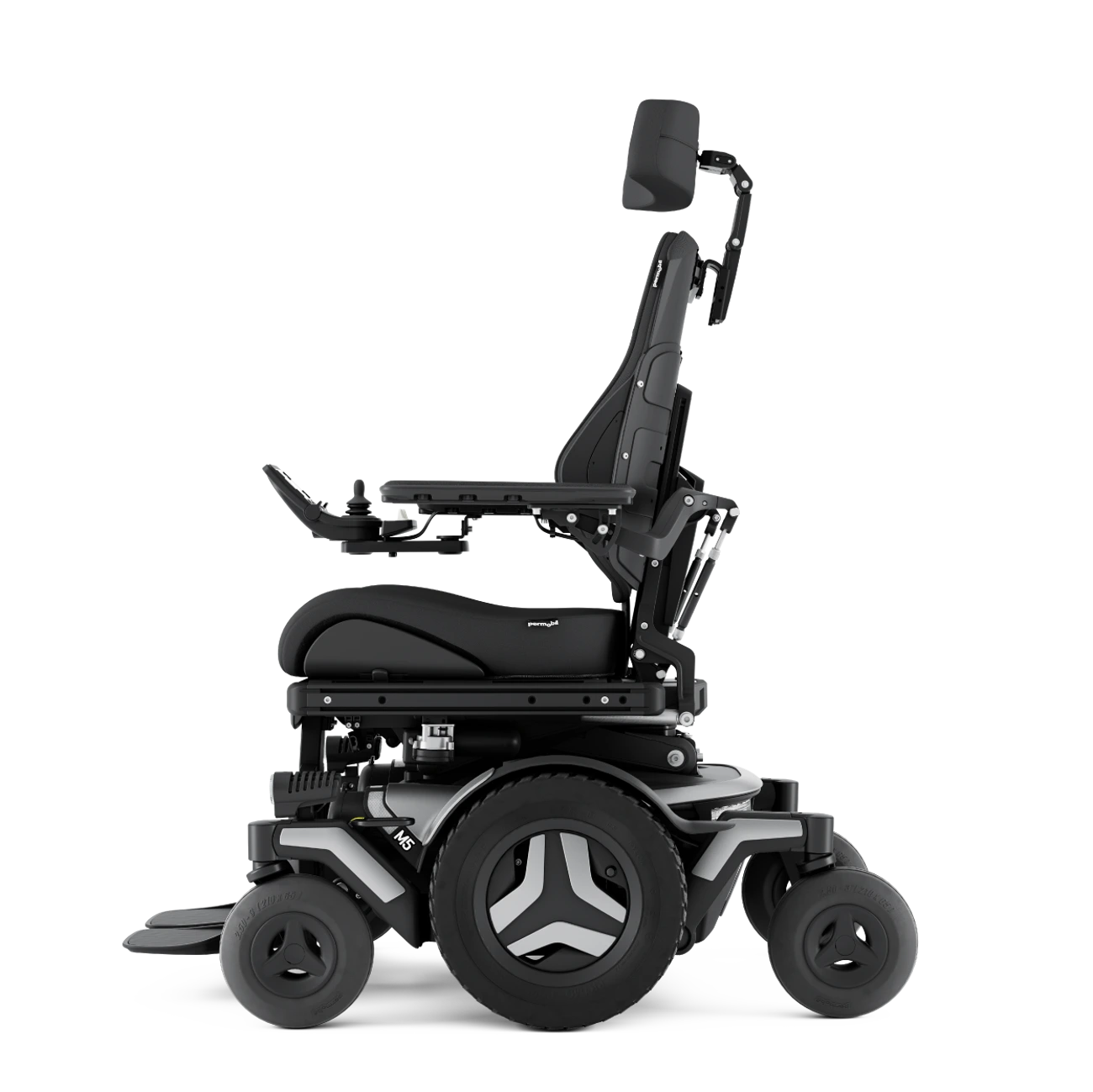
Permobil M5 Corpus
Permobil’s larger mid-wheel platform. It’s built for full power seating, including tilt, recline, a higher seat elevator and power legrests, for users who need it all day.
- DriveMid-wheel
- Power tiltAvailable
- Power reclineAvailable
- Seat elevatorActiveHeight
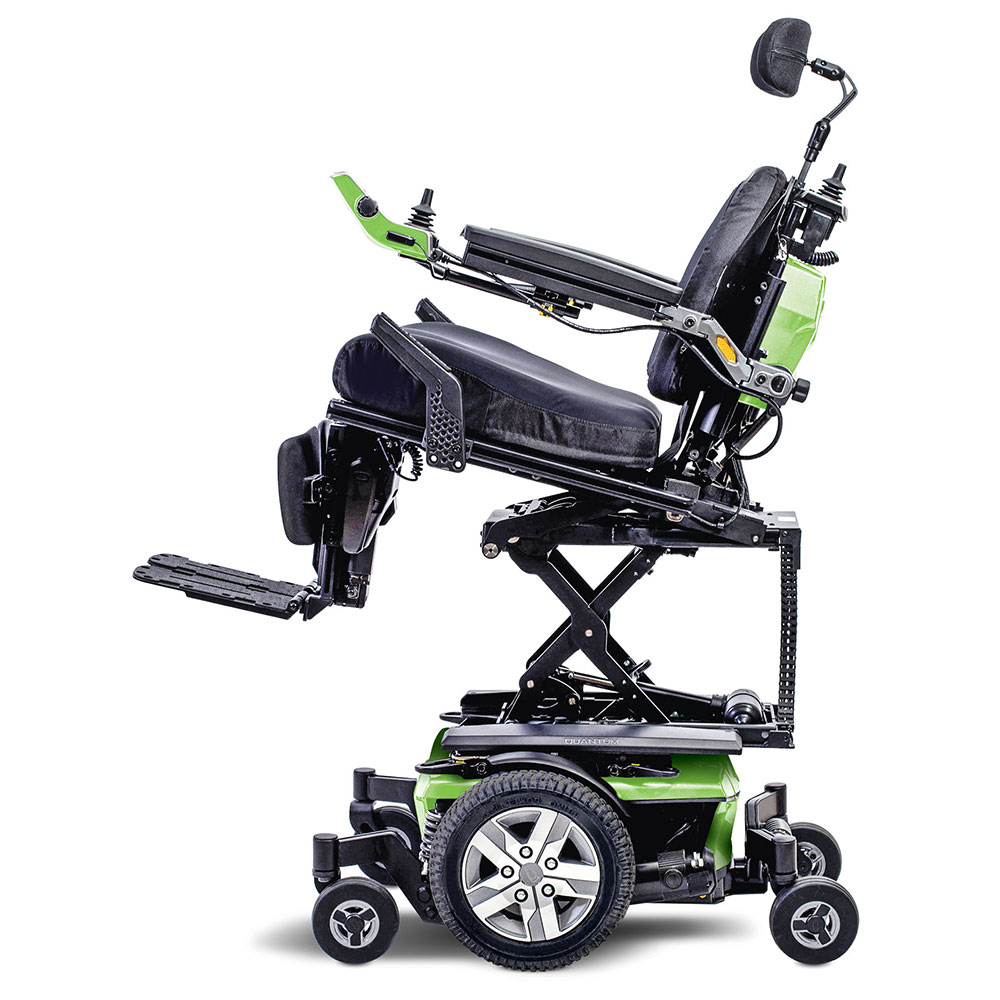
Quantum Q6 Edge 3 with iLevel
A mid-wheel drive chair with TRU-Balance power positioning for tilt and recline. iLevel seat elevation lets you drive while the seat is raised.
- DriveMid-wheel
- Power seatingTRU-Balance tilt & recline
- Seat elevatoriLevel, up to 12″
- Drive while elevatedYes
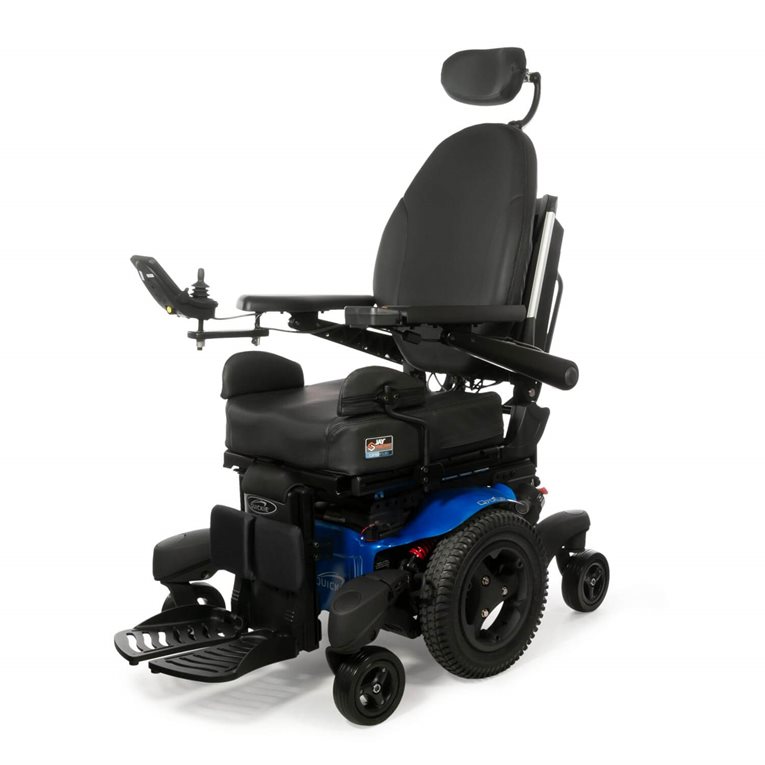
Quickie Q700 M
A mid-wheel drive chair from Sunrise Medical that can be fitted with complex power seating, including tilt and recline.
- DriveMid-wheel
- Power tiltAvailable
- Power reclineAvailable
- SeatingComplex rehab seating
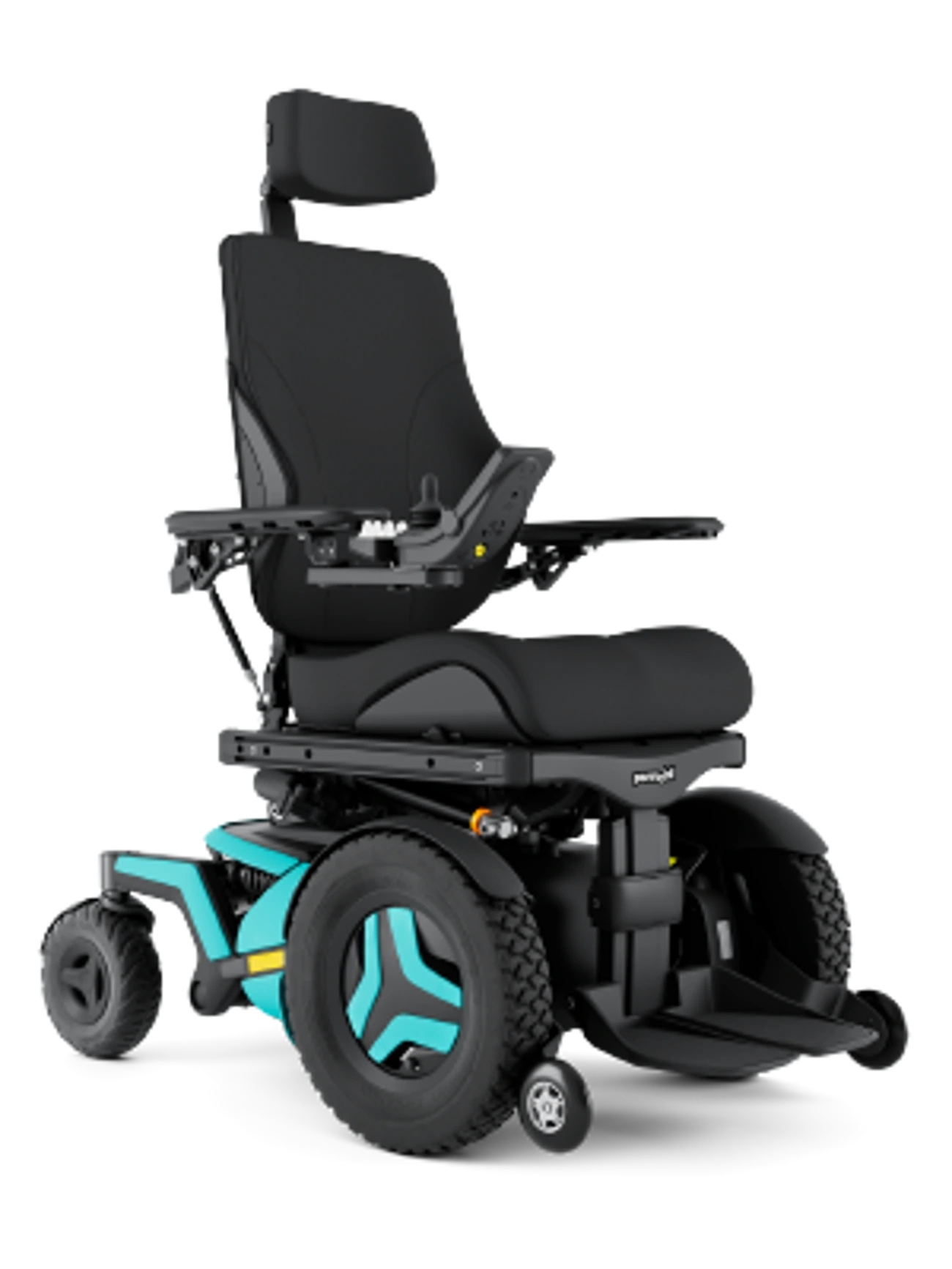
Permobil F5 Corpus VS
A front-wheel drive chair that combines Corpus power seating with a vertical standing system, for users who need both repositioning and standing.
- DriveFront-wheel
- Power tilt & reclineAvailable
- StandingFull vertical stand
- Drive while standingYes
Have a chair in mind?
We also work with other major complex rehab manufacturers, and we can talk through front-wheel and rear-wheel drive bases with power seating.
Power seating functions depend on the configuration ordered. Model availability and specifications are set by each manufacturer and can change.
Tilt vs. recline at a glance
They’re often confused, but they do different jobs, and many users need both.
| Power tilt | Power recline | |
|---|---|---|
| How it moves | The whole seat and back rotate together, and your hip angle stays the same | Only the backrest moves, opening your hip angle |
| Main uses | Pressure relief, posture, fatigue and tone management | Rest, stretching, catheterization, personal care and breathing |
| Shear & sliding | Minimal, because you stay in position | Can cause sliding unless paired with tilt or low-shear recline |
| Good for | People who can’t do an effective weight shift on their own | People who need to lie back or have limited hip flexion |
Clinical guidance, including the RESNA position paper on tilt, recline and elevating legrests, suggests that larger tilt angles are generally needed for meaningful pressure redistribution. Your therapist sets your angles and repositioning schedule.
How the evaluation works
Power seating is prescribed and fitted to you, not chosen from a catalog.
Contact us
Tell us your diagnosis, your current chair and the problems you’re having, such as pressure areas, fatigue or posture. We’ll explain the next steps.
Clinical assessment
Your physical or occupational therapist completes a seating and mobility evaluation, and we coordinate with them and your physician.
Trial & configuration
Where available, you try a demo. Then we specify the base, seating, power functions and controls.
Funding & paperwork
We help gather the documentation your plan needs and submit it for approval.
Delivery & follow-up
We fit the chair, program your seating, train you and your caregivers, and provide service afterward.
Power tilt & recline FAQ
What is the difference between tilt and recline?
Tilt rotates the whole seat and backrest together, so your hip angle stays the same. It’s mainly used for pressure relief and posture. Recline only moves the backrest back, opening your hip angle, which is useful for rest, stretching, catheterization and personal care.
Who needs a power tilt or recline wheelchair?
Usually people who can’t shift their own weight effectively, who are at high risk of pressure injuries, who have significant tone or spasticity, or who need to change position for breathing, fatigue or personal care. Common diagnoses include spinal cord injury, cerebral palsy, MS, ALS and muscular dystrophy.
Does Medicare cover power tilt and recline?
Medicare may cover power tilt and/or recline on a qualifying complex rehab power wheelchair when its coverage criteria are met and documented by your physician and therapist. We review your plan and help gather the paperwork before ordering.
Can I add tilt or recline to my current wheelchair?
Sometimes. It depends on the base, its age and the seating system. Power seating is usually built in when the chair is ordered, so an evaluation is the best way to find out.
Do you serve my area?
Our showroom is in Tustin, CA, and we serve Orange County and the surrounding Southern California area. Call us to talk about evaluations near you.
Need better positioning?
Talk to our complex rehab team in Tustin. We bring 22+ years of mobility experience and work alongside your therapist from evaluation through delivery.
Request an evaluation